what is WordPress hosting and best hosting companies
The internet is the backbone of modern businesses, blogs, and e-commerce platforms, and at the center of this digital growth lies WordPress hosting. If you’ve ever wondered what makes WordPress websites fast, secure, and scalable, the answer is hosting. But with so many providers in the market, choosing the best hosting company can feel overwhelming.
In this article, we’ll break down what WordPress hosting really means, why it’s important, and highlight the leading hosting providers in 2025. By the end, you’ll know to confidently pick the right hosting solution for your website.
What Is WordPress Hosting?
At its core, WordPress hosting is a type of web hosting specifically optimized to run WordPress websites, Unlike generic hosting, it offers tools, configurations, and server resources tailored to maximize WordPress performance.

There are two main types:
Shared WordPress Hosting – Budget-friendly, best for beginners with low to medium traffic.
Managed WordPress Hosting – A premium solution with automatic updates, backups, and enhanced security.
Some companies also provide VPS (Virtual Private Server) hosting or even dedicated servers optimized for WordPress, giving website owners more flexibility.
With this type of hosting, users benefit from:
Faster loading speeds thanks to caching and optimized servers.
Stronger security with malware scans and firewalls.
Easy scalability for growing websites.
A good example is PQ. Hosting, which provides scalable solutions and reliable support tailored for platforms like WordPress.
Why WordPress Hosting Matters in 2025
As more businesses and individuals rely on digital platforms, speed, security, and uptime are more critical than ever. Search engines reward websites that load quickly and penalize those that don’t. In fact, studies show that users leave a site if it doesn’t load within three seconds.
Here’s why choosing optimized hosting is vital:
Search Engine Optimization (SEO): Faster hosting directly improves rankings.
User Experience: A smooth, fast-loading site keeps visitors engaged.
Security: Advanced protection prevents hacks and data leaks.
Reliability: Top companies guarantee uptime of 99.9% or more.
For example, the Global Hosting Companies list showcases world-leading providers ensuring maximum performance and reliability, making it a great starting point for research.
Top WordPress Hosting Companies in 2025
When it comes to choosing the right provider, it’s not about picking the most popular brand—it’s about finding the company that matches your specific needs. In 2025, three major players stand out among WordPress hosting companies:
HostGator – Easy and affordable hosting with flexible pricing and beginner-friendly tools.
GoDaddy – A global leader offering AI-powered site builders and reliable WordPress hosting solutions.
Namecheap – A budget-friendly provider with SSD storage, free CDN, and 24/7 support.
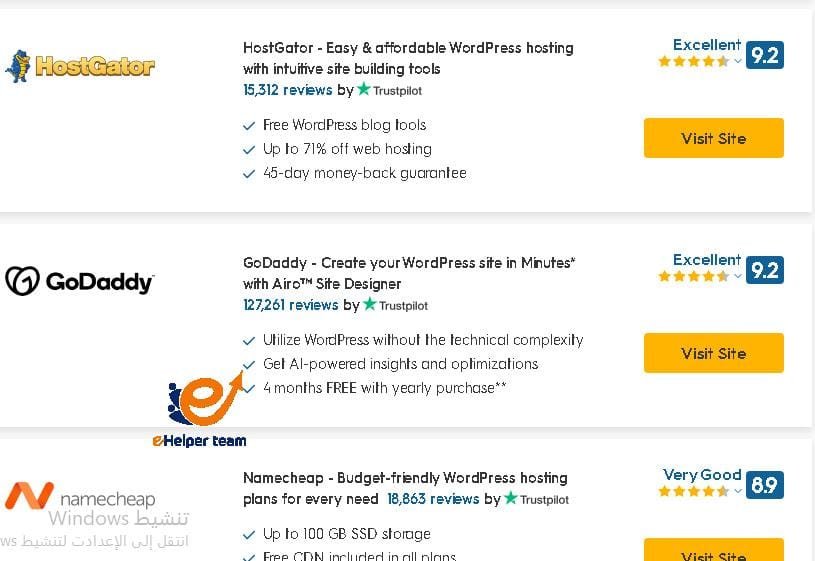
Each of these providers has its strengths:
HostGator is ideal for small businesses.
GoDaddy offers a mix of power and usability with AI-driven insights.
Namecheap is a great choice for those on a budget who still want solid performance.
How to Choose the Best WordPress Hosting Provider
Selecting the right hosting provider requires balancing features, price, and long-term growth. Here are the key factors:
Performance: Look for SSD storage, built-in caching, and CDN integration.
Security: Firewalls, malware protection, and free SSL are essential.
Support: 24/7 customer support is a must-have.
Scalability: Ensure the plan can grow as your traffic increases.
Price: Avoid cheap plans that compromise performance.
An excellent strategy is to start small and upgrade as your site grows. For instance, building an affiliate site in 2025 shows how picking the right hosting early on ensures smoother scaling in the future.
The Future of WordPress Hosting
As technology evolves, hosting companies are adopting innovations to meet modern demands:
AI-powered optimization for performance and security.
Green hosting using eco-friendly data centers.
Serverless architecture reducing downtime and costs.
Integration with headless CMS to support modern web apps.
By 2030, analysts predict most companies will use AI and automation to handle tasks like malware scanning, traffic spikes, and automatic scaling—ensuring WordPress websites run smoother than ever.
Common Mistakes to Avoid When Choosing a Host
Even smart site owners fall into traps. Avoid these to save time and money:
Chasing the lowest sticker price: Intro deals look great, but renewal rates, add-ons, and overage fees can surprise you. Compare total annual costs.
Ignoring resource limits: Check CPU, RAM, inodes, and storage I/O. “Unlimited” usually has fair-use policies—read them.
Skipping scalability planning: Make sure you can upgrade without downtime, migrate easily, and add resources for campaigns or seasonal peaks.
Overlooking support quality: 24/7 chat is great, but response times, escalation paths, and WordPress expertise matter more.
Accepting weak backup policies: Confirm frequency, retention, and restore process. On-demand snapshots are a plus.
Forgetting security basics: Ask about WAF, DDoS protection, malware removal, and two-factor authentication for the panel.
Data center location mismatch: Hosting far from your audience increases latency. A CDN helps, but closer is faster.
No staging or version control: Pushing untested changes to production invites downtime.
Read the SLA, test support before buying, and verify upgrade/migration paths.
Best Hosting by Use Case
Different projects have different needs. Here’s a simple way to decide:
Beginners & bloggers: HostGator and Namecheap offer simple dashboards, friendly pricing, and quick setup.
Small businesses & portfolios: SiteGround and GoDaddy balance performance, support, and tools like daily backups and built-in caching.
E-commerce (WooCommerce) & high-traffic sites: Kinsta and WP Engine provide managed stacks on premium clouds with strong uptime and support.
Developers & custom stacks: Cloudways and PQ.Hosting enable flexible server choices, SSH/CLI, and advanced tuning.
Global audiences: Cloud-first providers with multi-region deployments and bundled CDNs reduce latency worldwide.
Pick the tier that matches your current stage—then revisit when traffic and revenue grow.
Performance Benchmarks and How to Test Them
Don’t rely only on marketing claims. Measure performance with repeatable tests:
Core Web Vitals: Use PageSpeed Insights or Lighthouse to check LCP (Largest Contentful Paint), CLS (layout stability), and INP (interactivity). Track scores for home, blog, and product pages.
TTFB (Time to First Byte): Lower TTFB means faster server responses. Compare hosts at similar times of day with the same theme and plugins.
Load testing: Tools like k6 or Loader.io simulate concurrent users. Start small (25–50 users), then ramp up. Watch error rates and response times.
Uptime monitoring: Set up an external checker (e.g., UptimeRobot) for 30+ days to verify the SLA.
Real-user monitoring (RUM): Enable analytics for field data—what visitors actually experience on various devices and networks.
Caching/CDN impact: Test with and without the CDN and full-page cache to see true gains.
Controlled environment: Use the same theme, sample content, and plugins across hosts. Disable non-essential scripts to avoid bias.
Document your setup and results so future comparisons are apples-to-apples.
FAQs About WordPress Hosting
1. What is WordPress hosting used for?
It is designed to optimize performance, security, and management of WordPress websites.
2. Is WordPress hosting better than shared hosting?
Yes. While shared hosting can work, WordPress hosting provides better speed and WordPress-specific tools.
3. Which is the cheapest WordPress hosting provider?
Namecheap and HostGator often offer the most budget-friendly options.
4. Which hosting is best for large WordPress websites?
Kinsta and WP Engine are great choices for high-traffic sites.
5. Do I need managed WordPress hosting?
If you want hassle-free management, automatic updates, and better security, managed hosting is ideal.
6. Can I migrate my website to a new WordPress hosting provider?
Yes. Most providers, like SiteGround and Bluehost, offer free or affordable migration services.
Conclusion
Understanding what WordPress hosting is and knowing the best hosting companies in 2025 is crucial for building a successful website. From speed to security, the hosting provider you choose has a direct impact on your online presence.
Whether you’re a blogger, small business owner, or e-commerce entrepreneur, investing in optimized hosting will pay dividends in performance and growth.